Engineering Plastics
PA6
Function
Gears, bearings, automotive parts, textiles
Characteristics
High strength, wear resistant, good fatigue resistance
Advantage
Excellent mechanical properties and wear resistance
Disadvantage
Hygroscopic and can absorb moisture
Engineering Plastics
PA66
Function
Automotive parts, electrical components, industrial parts
Characteristics
High strength, heat resistant, good chemical resistance
Advantage
Higher melting point and rigidity than PA6
Disadvantage
Stronger hygroscopicity, poor dimensional stability
Engineering Plastics
PA11
Function
Oil pipelines, soft hoses, precision parts
Characteristics
Low water absorption, oil resistance, flexibility
Advantage
Good low temperature resistance and stable size
Disadvantage
High cost, insufficient hardness
Engineering Plastics
PA12
Function
Electronic accessories, medical parts, thin-wall products
Characteristics
Ultra-low water absorption, high toughness
Advantage
Best dimensional stability among nylon materials
Disadvantage
Expensive, poor high temperature resistance
Engineering Plastics
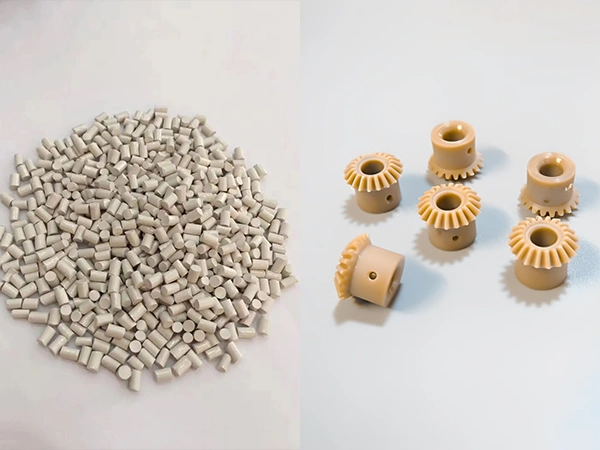
POM
Function
Gears, slider parts, fasteners
Characteristics
High hardness, wear resistance, self-lubricating
Advantage
High surface hardness, not easy to deform
Disadvantage
Poor weather resistance, easy to age
Engineering Plastics
PC
Function
Transparent parts, safety protection, electronic shells
Characteristics
High transparency, impact resistance, heat resistance
Advantage
Super strong impact resistance, non-toxic
Disadvantage
Poor scratch resistance, sensitive to hydrolysis
Engineering Plastics
ABS
Function
Home appliances, electronic housings, daily necessities
Characteristics
Balanced performance, easy coloring, easy processing
Advantage
Good comprehensive performance, low price
Disadvantage
Poor heat resistance, easy to yellow
Engineering Plastics
PMMA
Function
Light guide plates, display screens, optical parts
Characteristics
High light transmittance, weather resistance
Advantage
Crystal clear, excellent outdoor stability
Disadvantage
Low hardness, easy to scratch and crack
Engineering Plastics
PET
Function
Beverage bottles, packaging, fiber products
Characteristics
High strength, transparent, gas barrier
Advantage
Light weight, environmental protection, recyclable
Disadvantage
Poor high temperature resistance
General Purpose Plastics
PP
Function
Daily packaging, containers, auto interior parts
Characteristics
Light weight, corrosion resistance, high temperature resistance
Advantage
Low cost, high heat resistance, good toughness
Disadvantage
Poor low temperature resistance, easy to brittle
General Purpose Plastics
PE
Function
Plastic bags, pipes, chemical containers
Characteristics
Excellent chemical resistance, low temperature resistance
Advantage
Soft and tough, acid and alkali resistant
Disadvantage
Low heat resistance, difficult to bond
General Purpose Plastics
PS
Function
Disposable tableware, packaging, toys
Characteristics
High transparency, light weight, low price
Advantage
Good rigidity, easy to process and shape
Disadvantage
Very brittle, poor impact resistance
General Purpose Plastics
PVC
Function
Pipe fittings, profiles, daily plastic products
Characteristics
Wear resistance, flame retardant, low cost
Advantage
Flame retardant, good chemical stability
Disadvantage
Poor high temperature resistance, easy aging
High Performance Plastics
PEEK
Function
Aerospace, medical equipment, precision machinery
Characteristics
Ultra-high temperature resistance, high strength
Advantage
Comprehensive top performance, corrosion resistance
Disadvantage
Extremely expensive, high processing difficulty
High Performance Plastics
PI
Function
Aerospace components, high temperature insulation parts
Characteristics
Super high temperature resistance, radiation resistance
Advantage
Extreme environment resistance, stable performance
Disadvantage
High price, difficult molding
High Performance Plastics
PPS
Function
Electronic flame retardant parts, auto high temp parts
Characteristics
Flame retardant, high temperature resistant, corrosion resistant
Advantage
Excellent flame retardant and chemical resistance
Disadvantage
Brittle, poor toughness
Thermoplastic Elastomers
TPE/TPR
Function
Soft rubber parts, non-slip accessories, daily soft glue
Characteristics
Soft elastic, environmental protection, recyclable
Advantage
Rubber feeling, good anti-slip performance
Disadvantage
Poor high temperature resistance, easy to stain
Thermoplastic Elastomers
TPU
Function
Shoe materials, waterproof parts, wear-resistant parts
Characteristics
High wear resistance, oil resistance, high elasticity
Advantage
Wear-resistant, tear-resistant, high transparency
Disadvantage
Easy to yellow, poor hydrolysis resistance
Biodegradable Plastics
PLA
Function
Disposable tableware, degradable packaging, 3D printing
Characteristics
Fully biodegradable, plant-based raw materials
Advantage
Environmental protection, non-toxic, clear texture
Disadvantage
Poor heat resistance, brittle and fragile
Biodegradable Plastics
PBAT
Function
Degradable plastic film, shopping bags, flexible packaging
Characteristics
Tough, fully degraded, good processing
Advantage
Good toughness, solves PLA brittleness problem
Disadvantage
High cost, low hardness
Specialty Plastics
PTFE
Function
Anti-corrosion parts, high temperature sealing, non-stick coating
Characteristics
Anti-corrosion, high temperature resistance, self-lubricating
Advantage
King of corrosion resistance, ultra-low friction
Disadvantage
Difficult injection molding, poor rigidity
Specialty Plastics
PVDF
Function
Chemical equipment, lithium battery parts, waterproof film
Characteristics
Aging resistance, corrosion resistance, high strength
Advantage
Strong weather resistance and film forming property
Disadvantage
Expensive, strict processing requirements
Plastic Alloys
PC+ABS
Function
Notebook shells, automotive interior, large household appliances
Characteristics
Balanced toughness and rigidity, easy processing
Advantage
Overcome PC stress cracking and ABS heat resistance defects
Disadvantage
Slightly poor weather resistance
Plastic Alloys
PP+GF
Function
Structural parts, auto parts, high rigidity products
Characteristics
Glass fiber reinforced, high rigidity
Advantage
Low cost and high strength after modification
Disadvantage
Poor surface appearance, easy warping
Other Thermoplastics
EVA
Function
Foam materials, shockproof accessories, daily soft products
Characteristics
Light, soft, shock absorption
Advantage
Good cushioning performance, non-toxic
Disadvantage
Poor high temperature resistance, easy aging
Other Thermoplastics
ASA
Function
Outdoor products, solar shells, outdoor profiles
Characteristics
Ultra-strong weather resistance, anti-aging
Advantage
No yellowing for long-term outdoor use
Disadvantage
Higher price than ordinary ABS